Unlocking the Secrets of Greases and Lubricants for Optimal Performance
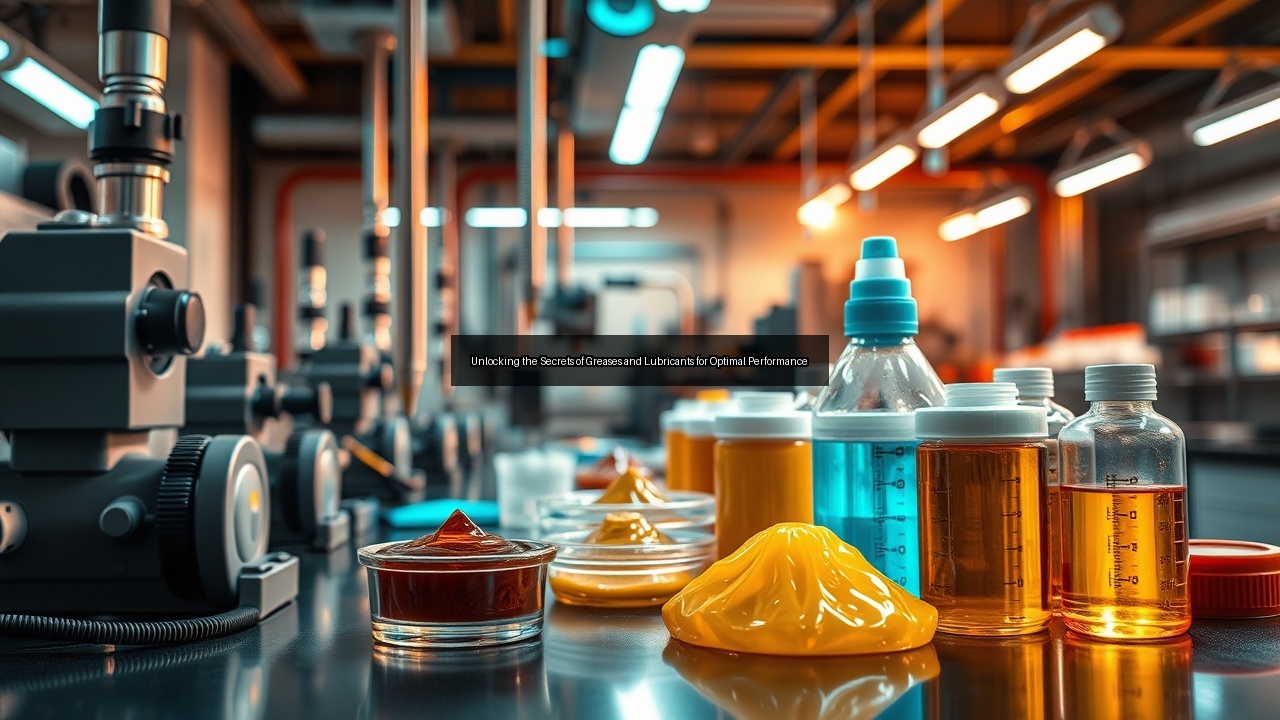
Understanding Greases and Lubricants
What Are Greases and Lubricants?
Greases and lubricants play a crucial role in reducing friction between surfaces in motion. Greases, typically a thickened oil, provide a semi-solid consistency that allows them to stay in place, making them ideal for applications where oil might run off. On the other hand, lubricants encompass a broader category that includes both oils and greases, designed to minimize wear and tear while ensuring smooth operation. The choice between grease and liquid lubricant often depends on specific operational requirements, such as temperature, load, and speed. Understanding the differences between these substances helps in selecting the appropriate type for any given application.
The Importance of Lubrication in Industry
Lubrication is vital in industrial settings for several reasons. Proper lubrication reduces friction, which in turn minimizes energy consumption and enhances equipment efficiency. Industrial machinery, subjected to constant wear, benefits significantly from effective lubrication, as it prolongs the life of components and decreases maintenance costs. Moreover, lubrication prevents overheating, which can lead to catastrophic failures. Regularly maintaining lubricating greases and ensuring they are suitable for the task at hand can lead to substantial operational benefits, including increased productivity and reduced downtime.
Key Components of Lubricating Greases
Lubricating greases consist of three primary components: a base oil, a thickener, and various additives. The base oil, which can be mineral-based or synthetic, provides the necessary lubrication properties. The thickener, often a soap or another substance, gives grease its semi-solid form, allowing it to adhere to surfaces better than liquid lubricants. Additives enhance the performance of greases, offering benefits such as oxidation resistance, corrosion protection, and improved thermal stability. Understanding these components helps industries select the right greases for their specific needs, ensuring optimal performance in various applications.
Types of Greases and Their Applications
Lithium Grease: Versatility and Performance
Lithium grease stands out for its versatility and high performance across a range of applications. Composed primarily of lithium soap, this type of grease exhibits excellent water resistance and thermal stability, making it suitable for high-temperature environments. Industries often use lithium greases in automotive, manufacturing, and marine applications due to their ability to withstand pressure and deliver long-lasting lubrication. Furthermore, lithium-based greases can accommodate a variety of base oils, enhancing their adaptability to different operating conditions. This flexibility makes lithium greases a preferred choice for many professionals seeking reliable lubrication solutions.
Calcium-Based Greases: Properties and Uses
Calcium-based greases offer unique properties that make them ideal for specific applications. These greases typically exhibit excellent water resistance, making them suitable for environments where moisture exposure is a concern. Additionally, calcium greases maintain good stability at high temperatures and provide effective lubrication in extreme pressure conditions. Industries such as agriculture and construction frequently utilize calcium-based greases due to their ability to perform well in harsh environments. Despite their limitations in some high-temperature applications, their reliable performance in wet conditions remains a strong selling point for many users.
Specialty Industrial Greases for Unique Applications
Specialty industrial greases cater to unique applications that require specific performance characteristics. Examples include high-temperature greases designed for furnace bearings and food-grade greases suitable for the food processing industry. These specialized greases often contain unique additives to enhance their performance, such as anti-wear agents or extreme pressure additives. Industries must carefully consider their operational needs when selecting specialty greases, as the right product can lead to improved efficiency, reduced maintenance, and enhanced safety. Understanding the specific requirements of each application ensures that equipment functions optimally and safely.
Manufacturing and Quality Control in Lubricant Production
The Role of the National Lubricating Grease Institute (NLGI)
The National Lubricating Grease Institute (NLGI) plays a pivotal role in the greases and lubricants industry. This organization sets standards for grease quality and performance, ensuring that products meet specific criteria for various applications. By providing certification programs and guidelines, the NLGI helps manufacturers maintain high standards in lubricant production. Their efforts contribute to the overall reliability and effectiveness of greases and lubricants, fostering trust among consumers and industries. Membership in NLGI also signifies a commitment to quality, which enhances a manufacturer's reputation in a highly competitive market.
Quality Control Measures in Grease Manufacturing
Quality control measures in grease manufacturing are essential for producing reliable and effective lubricants. Manufacturers implement rigorous testing protocols to ensure that their products meet industry standards. These measures often include checking the consistency, drop point, and viscosity of the grease, as well as assessing its performance in various conditions. By adhering to strict quality control procedures, manufacturers can identify potential issues early in the production process, ensuring that only the highest quality greases reach the market. This attention to detail not only boosts product performance but also enhances customer satisfaction.
Testing and Certification of Grease Materials
Testing and certification of grease materials are critical steps in ensuring the performance and reliability of lubricants. Various tests, such as the four-ball wear test and the oxidation stability test, evaluate how well a grease performs under specific conditions. Certification from organizations like the NLGI provides assurance that a grease meets established performance criteria. This certification process helps industries make informed decisions when selecting lubricants for their applications. By understanding the testing and certification standards, businesses can choose products that align with their operational requirements, ultimately enhancing equipment longevity and reliability.
Optimizing Performance with the Right Lubricants
Choosing the Right Lubricant for Industrial Applications
Selecting the right lubricant for industrial applications involves considering several factors, including operating temperature, load, and environmental conditions. Each lubricant type, whether it be greases or oils, has unique properties that make it suitable for specific tasks. For instance, lithium greases may excel in high-pressure environments, while calcium-based greases might be better for wet conditions. Additionally, understanding compatibility between different lubricants is crucial to avoid any adverse reactions. Conducting a thorough analysis of operational requirements ensures that industries can maximize equipment performance and minimize downtime.
Innovations in Lubricant Technology
Innovations in lubricant technology continue to shape the greases and lubricants landscape. Research and development efforts lead to the creation of synthetic lubricants that offer superior performance compared to traditional mineral oils. These synthetic options can withstand extreme temperatures and pressures, providing enhanced protection and efficiency. Additionally, advancements in additive technology improve the performance characteristics of lubricants, such as extending service life and reducing friction. As industries seek greener and more efficient solutions, innovations in lubricant technology will play a pivotal role in meeting these demands while ensuring optimal performance.
Future Trends in Greases and Lubricants
The future of greases and lubricants appears promising, with several trends shaping the industry. One significant trend is the increasing emphasis on sustainability. Manufacturers are exploring bio-based lubricants that reduce environmental impact without compromising performance. Additionally, the integration of smart technologies into lubrication systems allows for real-time monitoring and optimization, enhancing efficiency and reducing waste. As industries continue to evolve, the demand for high-performance greases and lubricants will persist, driving innovation and adaptation in this essential sector. By staying ahead of these trends, businesses can maintain their competitive edge and ensure long-term success.